Restore Proper Oral Function

What is Myofunctional Therapy?
Myofunctional therapy is a program of specific exercises that target the facial muscles used to breathe, chew, and swallow. Its primary goals are to use behavior modification techniques to help eliminate many of the causes of chewing and swallowing abnormalities and inappropriate oral rest posture. Myofunctional Therapy corrects improper orofacial movements and postures and restores the natural function of the orofacial structures that can help one better enjoy eating, speaking, and breathing and achieve optimal sleep outcomes. Many therapists may also provide motivational therapy to eliminate noxious oral habits such as prolonged pacifier, thumb or finger, cheek or lip biting, tongue sucking, and clenching/grinding of teeth.
In addition to the variety of cosmetic benefits of Myofunctional therapy, it is also an important adjunct to numerous orofacial surgeries, such as frenuloplasty and mandibular advancements.
To treat Orofacial Myofunctional Disorders (OMDs), myofunctional therapists must work with other allied professionals such as dentists, orthodontists, ENTs, allergists, and osteopaths to ensure the patient’s needs are addressed and handled appropriately to achieve optimal outcomes. Patient needs must be addressed from an interdisciplinary approach in order to be successful in treatment.
What is Orofacial Myofunctional Disorders (OMDs)?
Often abbreviated as OMDs, orofacial myofunctional disorders may interfere with the muscles and functions of the face and mouth used for eating, talking, and breathing. OMDs interfere with normal growth and development of the muscles and bones of the face and mouth in growing children and teenagers. Adults may suffer from OMDs too.
OMDs may affect, directly and/or indirectly, breastfeeding, facial skeletal growth and development, chewing, swallowing, speech, occlusion, temporomandibular joint movement, oral hygiene, stability of orthodontic treatment, facial esthetics, and more.
Some signs of an OMD may include one or a combination of, but are not limited to, one of the following:
- Mouth breathing or difficulty breathing through the nose;
- Overbite, underbite, and/or other dental problems;
- Jaw Pain/Temporomandibular Joint Disorder [TMJD];
- Inappropriate mouth/lips-open resting posture problem;
- Inappropriate thrusting of the tongue in speaking and/or swallowing;
- Thumb-, finger-, lip-, and tongue-sucking habits;
- Difficulty closing the lips to swallow;
Most OMDs start with insufficient habitual nasal breathing or with oral breathing. Blocked nasal passages because of congestion, allergies, or large tonsil size can promote breathing through the mouth. The subsequent adaptation of the muscles and orofacial functions creates many OMDs. Also, oral breathing dries the oral mucosa of the mouth. This can contribute to dental caries and gingival and periodontal problems. Oral breathing has many other health implications as well.
Some Oral Health Needs Connected to OMDs Include:
- Swallowing Difficulties: OMDs can lead to improper swallowing patterns, such as tongue thrusting, which can affect the alignment of the teeth and jaw.
- Speech Issues: OMDs can impact speech production, leading to speech disorders like lisps or difficulty pronouncing certain sounds.
- Breathing Problems: OMDs may cause issues with breathing, especially during sleep, which can contribute to sleep apnea or other breathing disorders.
- Chewing and Eating Challenges: OMDs can affect the ability to chew food properly and may result in difficulties with eating and digestion.
- Jaw Pain and TMD: OMDs can contribute to temporomandibular joint (TMJ) disorders and jaw pain due to improper muscle function and alignment.
- Dental Malocclusions: OMDs can lead to dental malocclusions, such as overbites or underbites, due to improper resting tongue position and swallowing patterns.
Because a person swallows 500-1000 times a day, improper swallowing can cause a variety of problems. But it is actually the resting position of the tongue that does the most damage because it is more constant.
Proper oral posture is the key to functioning as your B.E.S.T. self (Breathe. Eat. Sleep. Thrive)
Dental Problems Related to an OMD
When a person swallows incorrectly, the tip and/or sides of the tongue press against or spread between the teeth. This is commonly called a tongue thrust. Constant pressure from resting or incorrectly thrusting the tongue away from the hard palate may push teeth out of place. That pressure may later prevent teeth from erupting (breaking through the gum).
An OMD may lead to an abnormal bite—the improper alignment between the upper and lower teeth known as malocclusion. This problem may lead to difficulties in biting, chewing, swallowing, and digesting food.
Tongue thrust is the act of pushing the tongue against or between the teeth when swallowing.
The constant pressure of the tongue against or between the teeth will not allow the teeth to bite together. This is known as an open bite.
An improper alignment or malocclusion between the upper and lower teeth can lead to difficulties in biting and chewing food.
Often the most obvious symptom of incorrect oral posture involves the muscles of the face. A dull, sluggish appearance and full, weak lips develop when muscles aren’t operating normally.
Constantly parted lips (with or without mouth breathing) also signal this disorder. A person swallowing incorrectly will often purse and tighten the muscles of the cheeks, chin, and lips—a symptom known as a facial grimace. This can give the chin a knobby appearance because these muscles are being overused.
Mouth breathing or constantly open lips is a cause and/or signal of tongue thrust and low tongue rest posture.
The face can have a dull, sluggish appearance when the muscles are not in proper balance.
An incorrect swallow will purse and tighten the muscles of the cheeks, chin, and lips, causing a facial grimace.
Speech Problems That May Develop From an OMD
Sleep-Disordered Breathing and Mild to Moderate OSA
Sleep-Disordered Breathing and Mild to Moderate OSA
Improper oral muscle function may additionally lead to TMJ dysfunction, headaches, stomach distress (from swallowing air), airway obstruction, and other health challenges.
A person with abnormal oral muscle patterns may suffer a lisp or have difficulty in articulating sounds. If muscles in the tongue and lips are incorrectly postured, this can prevent a person from forming sounds of normal speech.
Sleep-Disordered Breathing and Mild to Moderate OSA
Sleep-Disordered Breathing and Mild to Moderate OSA
Sleep-Disordered Breathing and Mild to Moderate OSA
Recent research has shown that myofunctional therapy may reduce the symptoms of sleep-disordered breathing (such as snoring) and ameliorate mild to moderate OSA (obstructive sleep apnea). When functioning and used properly, the muscles of the tongue, throat, and face can reduce obstruction to the airway.
Orofacial Myofunctional Therapy (OMT) eliminates many of the causes of swallowing abnormalities and improper rest posture of the tongue.
Orofacial myofunctional therapy is painless, and the exercises are relatively simple. When certain muscles of the face are activated and functioning properly, other muscles will follow suit until proper coordination of the tongue and facial muscles is attained.
For success in this therapy, consistent exercise every day is necessary until the patient has corrected their improper muscle pattern. It also takes commitment by the patient, family – and time.
Treatment usually consists of a regular program of exercises over a 6 – 12 month period, although treatment length may vary.
Interdisciplinary Approach
A properly trained myofunctional therapist is one member of the team that will successfully treat an OMD. Other allied professionals, such as ENTs, Sleep MDs, dentists, orthodontists, SLPs, and osteopaths, can ensure that the patient’s needs are addressed and handled appropriately. We feel that the patient needs to be looked at from a variety of approaches in order to be successful in treatment.

The Role of Dental Hygienists in Identifying and Treating Airway Dysfunction
With more understanding of airway dysfunction comes more opportunity to treat those who suffer. Dental hygienists are in a perfect position to work with patients in airway and sleep dysfunctions.
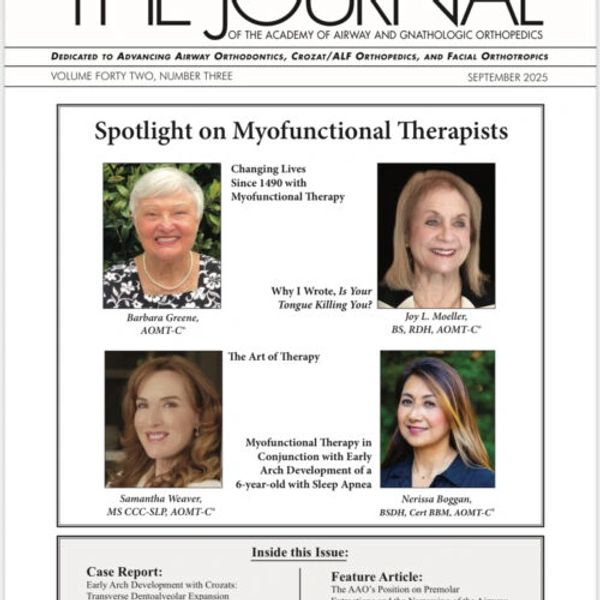
Membership Has Its Advantages!
Join today to become a member of the American Association of Gnathologic Orthopedics (AAGO) and gain access to the very first myofunctional therapy case report in the September issue, along with the complete archive of the Journal of the Academy of Airway and Gnathologic Orthopedics.
Orofacial Fitness
Call us
Office Hours
Office Hours
(925) 962-7450
Office Hours
Office Hours
Office Hours
Tuesdays, Wednesdays, and the 3rd Friday of each month. In-person and virtual visits are available by appointment ONLY.
Location
Office Hours
Location
Lafayette and Walnut Creek
This website uses cookies.
We use cookies to analyze website traffic and optimize your website experience. By accepting our use of cookies, your data will be aggregated with all other user data.